

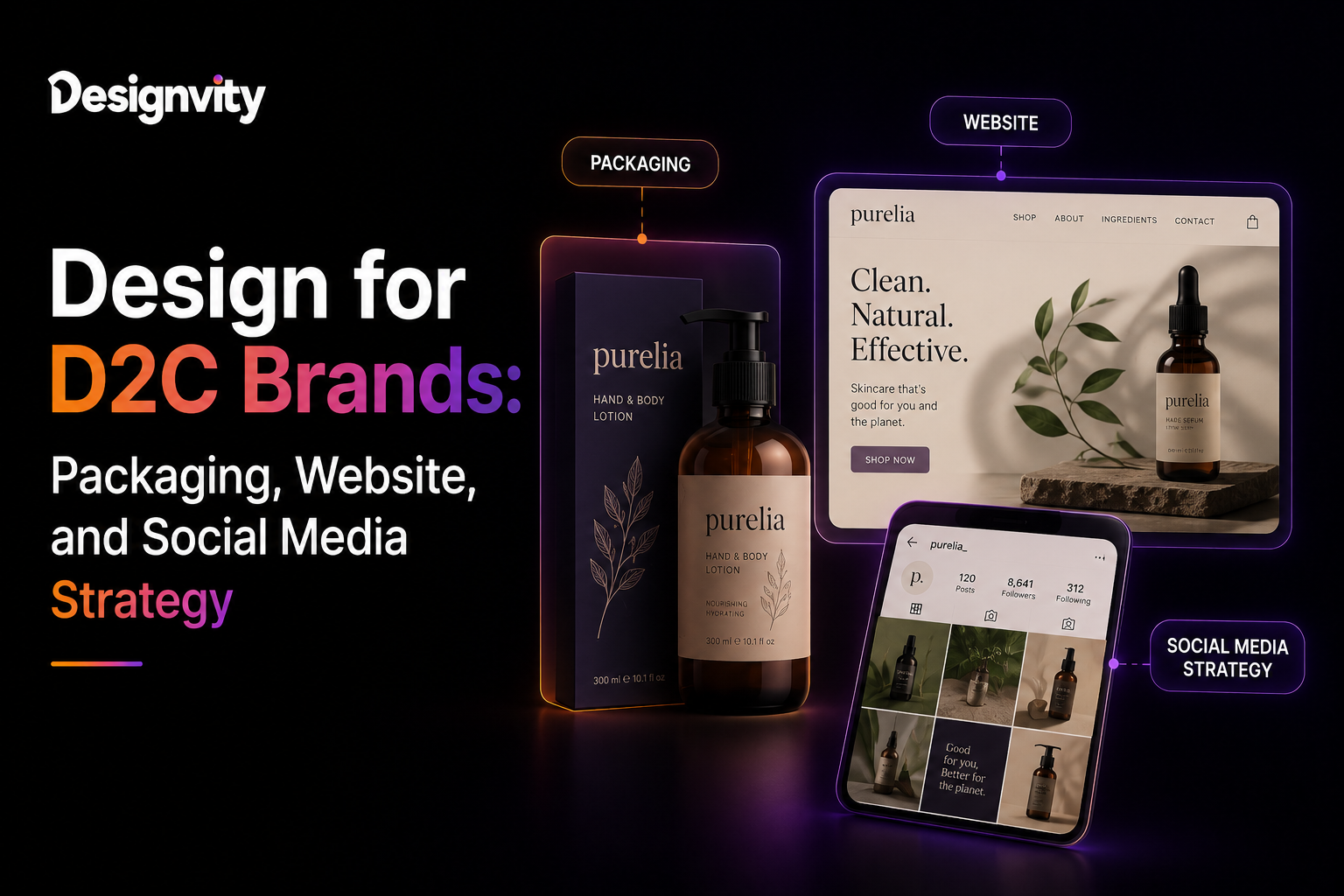
Direct-to-consumer (D2C) brands have transformed the way businesses connect with customers. Instead of relying on retailers, modern brands build relationships directly through their websites, marketplaces, and social media channels. This shift gives businesses greater control over customer experiences—but it also raises the bar for design.
A successful D2C brand design strategy goes beyond creating an attractive logo. Every customer touchpoint—from product packaging to your Shopify store and Instagram feed—must tell the same story. Consistent visuals build trust, improve recognition, and encourage repeat purchases.
Whether you’re launching a skincare brand, apparel company, food product, or tech accessory, a strong direct-to-consumer branding strategy combined with a compelling ecommerce visual identity can significantly impact conversions and customer loyalty.
In this guide, we’ll explore how to create a cohesive D2C brand experience that drives growth across every channel.
Why Design Matters for D2C Brands
Unlike traditional retail brands, D2C companies often rely entirely on digital channels to attract and convert customers.
Good design helps you:
- Build trust instantly
- Differentiate from competitors
- Increase website conversions
- Improve customer retention
- Strengthen brand recognition
- Encourage social sharing
- Enhance the unboxing experience
Today’s customers don’t just buy products—they buy experiences.
What Is a D2C Brand Design Strategy?
A D2C brand design strategy is a comprehensive plan that ensures your visual identity remains consistent across every customer interaction.
It includes:
- Brand identity
- Product packaging
- Website design
- Mobile experience
- Social media creatives
- Email marketing assets
- Digital advertisements
- Customer onboarding materials
The goal is to create one seamless brand experience from the first impression to post-purchase engagement.
Step 1: Build a Strong Brand Identity
Every successful D2C brand starts with a clear identity.
Your brand foundation should include:
- Logo
- Color palette
- Typography
- Brand voice
- Photography style
- Iconography
- Illustration style
- Design guidelines
These elements create recognition and consistency across all platforms.
Step 2: Design Packaging That Sells
Packaging is often the first physical interaction customers have with your brand.
Well-designed packaging should:
- Reflect your brand personality
- Protect the product
- Create memorable unboxing experiences
- Encourage user-generated content
- Include clear product information
- Support sustainability where possible
Premium packaging often leads to repeat purchases and increased social media exposure.
Packaging Best Practices
Consider including:
- Minimal yet impactful design
- Eco-friendly materials
- QR codes linking to tutorials or offers
- Personalized thank-you cards
- Branded inserts
- Consistent typography and colors
Small details create lasting impressions.
Step 3: Build a High-Converting Website
Your website is your digital storefront.
A successful D2C website should prioritize:
Fast Loading Speed
Slow websites increase bounce rates and reduce conversions.
Mobile Optimization
Most online shoppers browse and purchase from mobile devices.
Clear Navigation
Help visitors find products quickly with intuitive menus and search functionality.
High-Quality Product Pages
Each product page should include:
- Professional images
- Lifestyle photography
- Product videos
- Detailed descriptions
- Customer reviews
- Clear pricing
- Strong calls to action
Trust Signals
Build confidence with:
- Secure checkout badges
- Customer testimonials
- Return policies
- Shipping information
- Contact details
Step 4: Create a Consistent Social Media Presence
Social media is often where customers first discover D2C brands.
Maintain a consistent visual identity across platforms by using:
- Branded templates
- Consistent color schemes
- Cohesive typography
- High-quality product photography
- Lifestyle content
- User-generated content
- Motion graphics
- Short-form videos
Consistency strengthens recognition and engagement.
Content Ideas for D2C Brands
Create a balanced content strategy featuring:
- Product launches
- Behind-the-scenes content
- Customer testimonials
- Tutorials
- Unboxing videos
- Seasonal campaigns
- Educational tips
- Brand storytelling
Diversified content keeps audiences engaged.
Step 5: Optimize the Customer Journey
A successful D2C brand design strategy considers every stage of the customer experience.
Awareness
- Social media ads
- Organic content
- Influencer collaborations
Consideration
- Product pages
- Reviews
- FAQs
- Comparison charts
Purchase
- Simple checkout
- Multiple payment options
- Transparent shipping
Post-Purchase
- Thank-you emails
- Order tracking
- Loyalty rewards
- Review requests
- Referral programs
Each interaction should reinforce your brand identity.
Step 6: Design for Email Marketing
Email remains one of the highest-converting marketing channels.
Maintain visual consistency by using:
- Branded headers
- Product imagery
- Consistent typography
- Clear CTAs
- Personalized messaging
Well-designed emails improve open rates and conversions.
Step 7: Invest in Visual Storytelling
Customers connect emotionally with stories.
Use visuals to communicate:
- Brand mission
- Founder journey
- Product benefits
- Customer success stories
- Sustainability initiatives
- Community involvement
Story-driven design creates stronger emotional connections.
Common Design Mistakes D2C Brands Should Avoid
Avoid these common pitfalls:
- Inconsistent branding across channels
- Low-quality product photography
- Overcomplicated packaging
- Poor mobile experiences
- Weak product descriptions
- Generic social media content
- Slow-loading websites
- Lack of accessibility
Consistency and clarity always outperform complexity.
Future Trends in D2C Brand Design
As consumer expectations evolve, successful brands are embracing:
- AI-powered personalization
- Interactive product experiences
- Sustainable packaging
- Augmented Reality (AR) previews
- Video-first product pages
- Dynamic ecommerce experiences
- User-generated content integration
- Personalized packaging
Brands that innovate while maintaining consistency will stand out in increasingly competitive markets.
Why Choose DesignVity?
At DesignVity, we help D2C brands create memorable customer experiences through strategic design and creative execution.
Our services include:
- Brand Identity Design
- Packaging Design
- Shopify Website Design
- WordPress Development
- UI/UX Design
- Motion Graphics
- Social Media Creatives
- Product Page Design
- Creative Subscription Services
- Marketing Design Support
Whether you’re launching a new product or scaling an established ecommerce brand, our team delivers creative solutions that help you attract customers, strengthen your brand, and increase conversions.
People Also Search For
- D2C branding strategy
- Ecommerce visual identity
- Packaging design for startups
- Shopify brand design
- Product packaging design services
- Direct-to-consumer branding
- Ecommerce website design
- Social media branding ideas
- Brand identity for ecommerce
- D2C marketing strategy
People Also Ask
What is a D2C brand design strategy?
A D2C brand design strategy is a plan for creating a consistent visual identity across packaging, websites, social media, email marketing, and other customer touchpoints.
Why is packaging important for D2C brands?
Packaging creates the first physical impression of your brand, enhances the unboxing experience, and encourages customer loyalty and social sharing.
How does website design impact ecommerce sales?
A well-designed website improves user experience, builds trust, reduces friction during checkout, and increases conversion rates.
Why is social media branding important for D2C companies?
Consistent social media branding strengthens recognition, builds trust, increases engagement, and helps customers remember your business.
What makes a successful ecommerce visual identity?
A successful ecommerce visual identity includes consistent colors, typography, photography, packaging, website design, and messaging across every platform.
FAQ’s
How often should D2C brands refresh their branding?
A complete rebrand isn’t always necessary, but brands should periodically update visuals to stay relevant while maintaining core identity elements.
Which ecommerce platform is best for D2C brands?
Platforms like Shopify, WooCommerce, and custom ecommerce solutions each offer advantages depending on your business size, customization needs, and growth plans.
Does packaging influence repeat purchases?
Yes. High-quality packaging improves customer satisfaction, creates memorable experiences, and often encourages repeat business and word-of-mouth referrals.
Should startups invest in professional brand design?
Absolutely. A strong visual identity helps startups establish credibility, attract customers, and compete effectively from day one.
Can DesignVity handle ongoing creative support for D2C brands?
Yes. DesignVity’s subscription-based creative services provide ongoing support for branding, website updates, marketing assets, social media creatives, packaging, and more.
Conclusion
A successful D2C brand design strategy is about much more than aesthetics—it’s about creating a seamless customer experience across every interaction. From eye-catching packaging and intuitive websites to engaging social media content, every design decision should reinforce your brand’s values and make it easier for customers to connect with your products.
By combining thoughtful direct-to-consumer branding with a strong ecommerce visual identity, businesses can build trust, improve customer loyalty, and drive sustainable growth in competitive markets.
If you’re ready to elevate your D2C brand with professional design solutions, DesignVity offers the expertise, creativity, and ongoing support to help your business stand out and scale with confidence.