

Design is now one of the biggest growth drivers for modern businesses.
Whether you are launching ads, building landing pages, scaling social media, improving UX, or creating investor presentations — your creative output directly impacts conversions and brand perception.
But here’s the challenge:
Which design service model is actually right for your business?
Should you hire a freelancer? Work with a traditional agency? Or switch to a subscription-based design service?
This guide by Designvity breaks down the complete framework for choosing design service model options in 2026.
We’ll compare:
- pricing
- scalability
- turnaround time
- workflow efficiency
- ideal business use cases
- red flags to avoid
So you can confidently choose the best creative setup for your company.
Why Choosing the Right Design Model Matters
The wrong creative setup can cost businesses:
- delayed campaigns
- inconsistent branding
- poor-quality creatives
- missed deadlines
- wasted marketing budget
- operational inefficiency
Modern companies require design support for:
- social media content
- paid ads
- UI/UX design
- presentations
- branding assets
- landing pages
- email campaigns
- product launches
The demand is constant.
That’s why businesses are moving away from outdated creative workflows and searching for more scalable and flexible solutions.
The 3 Main Design Service Models
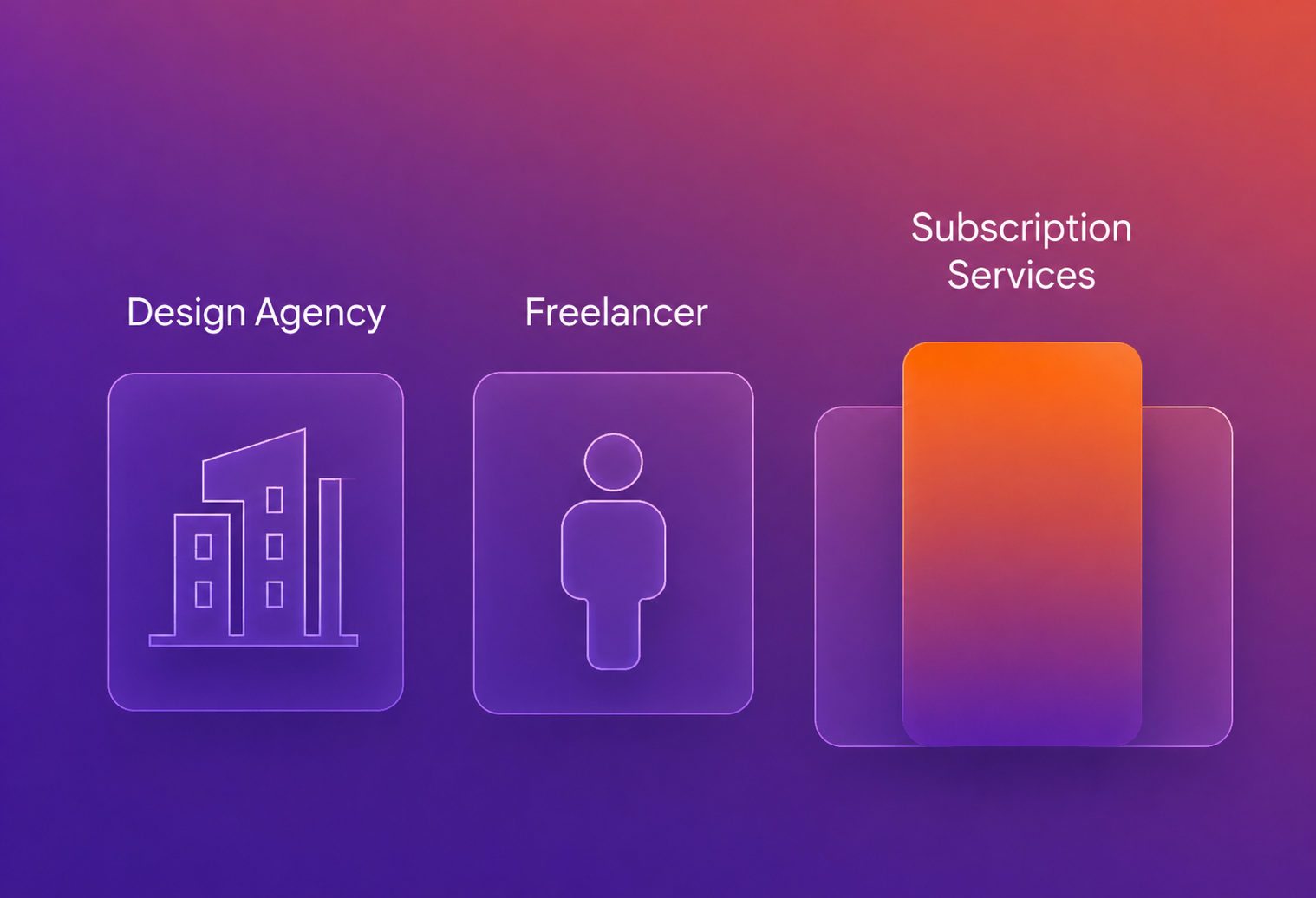
Businesses today typically choose between:
- Freelancers
- Design Agencies
- Subscription Design Services
Each model has different strengths, weaknesses, pricing structures, and scalability levels.
Let’s break them down.
Option 1: Freelancers
Freelancers are independent professionals hired for individual projects or ongoing work.
They are often the most affordable entry point for startups and small businesses.
Pros of Hiring Freelancers
Lower Upfront Costs
Freelancers usually charge:
- hourly rates
- project fees
- monthly retainers
This makes them accessible for businesses with limited budgets.
Flexible Hiring
You can hire freelancers only when needed.
Perfect for:
- one-time projects
- short campaigns
- occasional design tasks
Direct Communication
You communicate directly with the designer without account managers or approval layers.
This can speed up feedback and revisions.
Cons of Hiring Freelancers
Limited Skill Range
One freelancer rarely handles everything.
You may still need additional specialists for:
- motion graphics
- UI/UX
- branding
- web design
- illustrations
Availability Problems
Freelancers often manage multiple clients at once.
Common issues include:
- missed deadlines
- inconsistent availability
- delayed responses
Scalability Challenges
As your design workload grows, managing multiple freelancers becomes difficult and time-consuming.
Ideal Use Cases for Freelancers
Freelancers work best for:
- startups with limited budgets
- one-time projects
- small businesses
- businesses needing niche creative skills
Red Flags to Avoid With Freelancers
No portfolio or inconsistent work quality Poor communication speed No structured workflow Unrealistically cheap pricing No revision process No deadline accountability
Option 2: Design Agencies
Design agencies provide full-service creative support through internal teams.
This usually includes:
- designers
- strategists
- project managers
- branding experts
- developers
Agencies focus on both execution and high-level strategy.
Pros of Working With a Design Agency
Strategic Creative Direction
Agencies often help with:
- brand positioning
- campaign strategy
- design systems
- conversion optimization
This makes them ideal for large-scale projects.
Access to Multiple Specialists
Instead of relying on one designer, agencies provide full teams with diverse expertise.
Structured Processes
Most agencies offer:
- project management systems
- account managers
- reporting
- quality control
This creates smoother collaboration for large organizations.
Cons of Design Agencies
Expensive Pricing
Traditional agencies are usually the most expensive option.
Typical Pricing in 2026
| Agency Type | Monthly Cost |
|---|---|
| Small Agency | $3,000 – $8,000 |
| Mid-Sized Agency | $8,000 – $20,000 |
| Enterprise Agency | $20,000+ |
Slower Execution Speed
Agencies often involve:
- multiple approvals
- internal reviews
- meetings
- layered communication
This slows turnaround times.
Long-Term Contracts
Many agencies require:
- fixed retainers
- 6–12 month contracts
- minimum commitments
This reduces flexibility.
Ideal Use Cases for Design Agencies
Agencies are best for:
- enterprise businesses
- complete rebranding projects
- large marketing campaigns
- strategic creative direction
Red Flags to Avoid With Agencies
Overpromising unrealistic timelines Hidden pricing structures Excessive account management layers Slow communication cycles Long lock-in contracts No measurable creative KPIs
Option 3: Subscription Design Services
Subscription-based design services give businesses ongoing creative support for a fixed monthly fee.
This model has become one of the fastest-growing design agency alternatives in 2026.
Pros of Subscription Design Services
Predictable Monthly Pricing
Flat-rate pricing helps businesses control creative budgets more efficiently.
Unlimited Requests & Revisions
Many subscription services include:
- unlimited design requests
- unlimited revisions
- ongoing task queues
This improves workflow consistency.
Faster Turnaround
Most subscription models deliver work within:
- 24–24 hours
Which is significantly faster than traditional agency workflows.
Scalable Creative Support
Businesses gain access to multiple creative specialties including:
- social media design
- UI/UX
- presentation design
- branding
- ad creatives
- motion graphics
Without hiring multiple employees.
Cons of Subscription Services
Less Real-Time Collaboration
Most subscription workflows are asynchronous.
Communication usually happens through:
- dashboards
- task boards
- project systems
Limited Strategic Consulting
Subscription services are primarily execution-focused rather than strategy-focused.
Complex brand strategy may still require an agency.
Ideal Use Cases for Subscription Services
Subscription models are considered the best design service for startups and scaling businesses because they provide:
- affordability
- scalability
- speed
- flexibility
Perfect for:
- SaaS companies
- ecommerce brands
- marketing agencies
- startups
- growing businesses
Red Flags to Avoid With Subscription Services
Unrealistic “unlimited” promises with slow delivery No clear turnaround timelines No dedicated workflow system Generic low-quality templates Poor revision handling Lack of communication transparency
Complete Pros & Cons Matrix
| Factor | Freelancer | Design Agency | Subscription Service |
|---|---|---|---|
| Cost | Low | High | Medium |
| Scalability | Low | High | High |
| Speed | Medium | Medium | Fast |
| Skill Variety | Limited | Extensive | Extensive |
| Strategic Support | Low | High | Medium |
| Flexibility | High | Low | High |
| Project Management | Low | High | Medium |
| Long-Term Commitment | Low | High | Low |
| Best For | Small Tasks | Large Campaigns | Ongoing Creative Work |
Which Model Is Most Cost-Effective?
Estimated Annual Costs
| Model | Estimated Annual Cost |
|---|---|
| Freelancer | $10,000 – $40,000 |
| Design Agency | $60,000 – $250,000+ |
| Subscription Service | $12,000 – $60,000 |
For most growing businesses, subscription services provide the strongest balance between:
- cost efficiency
- creative scalability
- turnaround speed
- operational flexibility
Decision Framework: Which One Should You Choose?
Choose Freelancers If:
- You need occasional design work
- Your budget is limited
- You need one specific skill
- You have low design volume
Choose a Design Agency If:
- You need strategic brand direction
- You are running enterprise campaigns
- You require complex collaboration
- Budget is not a major concern
Choose a Subscription Service If:
- You need consistent creative output
- You want predictable pricing
- You need fast turnaround
- Your business is scaling quickly
- You want agency-level support without agency pricing
What Modern Businesses Are Choosing in 2026
The industry trend is shifting toward flexible creative systems.
Why?
Because businesses want:
- lower overhead
- faster production
- scalable workflows
- predictable budgets
- reduced hiring complexity
That’s why subscription-based creative services are rapidly becoming one of the most popular design agency alternatives for startups and growth-focused companies.
Many companies now combine multiple models:
Example Hybrid Setup
- Agency → strategy
- Subscription service → daily design execution
- Freelancers → niche tasks
This creates maximum flexibility and efficiency.
Final Verdict
There’s no universal “best” design model.
The right solution depends on:
- your budget
- growth stage
- creative workload
- internal operations
- marketing goals
But for most startups and modern scaling businesses, subscription-based design services offer the strongest combination of:
- affordability
- flexibility
- speed
- scalability
Without the operational complexity of building a large internal creative team.
Why Businesses Choose Designvity
Designvity helps businesses scale their creative production with flexible subscription-based design support.
Our services include:
- unlimited design requests
- fast turnaround times
- branding support
- UI/UX design
- presentation design
- marketing creatives
- scalable workflows
Whether you are a startup, SaaS brand, ecommerce company, or agency, Designvity provides reliable creative support without the overhead of traditional hiring or expensive agency retainers.
FAQs
What is the best design service for startups?
For most startups, subscription-based design services offer the best balance of affordability, scalability, and speed.
Are design agencies better than freelancers?
Agencies provide stronger strategic support and larger teams, but freelancers are usually more affordable and flexible.
What are the best design agency alternatives?
Subscription design services are currently one of the most popular alternatives because they combine predictable pricing with scalable creative output.
When should businesses avoid freelancers?
Businesses should avoid relying solely on freelancers when creative workload becomes large, ongoing, or highly complex.
Why are subscription services becoming popular?
Because they provide fast turnaround times, flexible pricing, scalable support, and reduced operational overhead compared to traditional hiring models.